
Refining Space Technology: A Look At 2026
What I expect to see in the New Year

It has been a few months since I was last able to find the time to write about the industry. A lot has happened that has kept me from putting thought into a post—namely, working for Space Systems Command to reach a new launch record (100 and counting) at Cape Canaveral Space Force Station.
But, today is a new day and a new opportunity to identify which technologies I believe will change the future on orbit.
1. Solar Thermal Propulsion
From 2024–2025, I supported the Defense Advanced Research Projects Agency’s (DARPA) Demonstration Rocket for Agile Cislunar Operations (DRACO) program, helping to pathfind their nuclear propulsion system with the Department of Defense, NASA, and Department of Transportation. While priorities shifted and the project moved out of DARPA, DRACO served as the crucial regulatory pathfinder for other nuclear-thermal technologies to launch.
Since the beginning of 2025, the idea of nuclear technology becoming a cornerstone of energy production for America’s compute, exploration, and data infrastructure has escaped Pandora’s box. The Department of Energy and private industry are investing large amounts of capital to see that vision through.
However, another propulsion technology is emerging on the space vehicle frontier: Solar Thermal Energy.
Solar thermal propulsion enables high, sustained delta-V on orbit in an unprecedented manner: 6 km/s on vehicles that are taskable in minutes. The technology is not the important part, but what it enables. It makes persistent, high-speed, hyper-flexible, and lasting space vehicles a reality for defense missions. It makes on-orbit delivery cheaper and the launch of high-performance space vehicles easier—without the regulatory burden that accompanies nuclear thermal vehicles.
2. Material Science & AI
Artificial Intelligence (AI) has changed everything in the last two years. Space has not been impervious. The primary differences AI has made are observed in operational performance, software development, and data processing.
However, another facet of technological development may soon see a revolution of its own: material science. As scientists discover new elements and create new alloys, the integration of AI is beginning to catalyze those processes quicker. This phenomenon will create lighter, more durable, and more flexible materials with unique properties.
Those properties can be customized to meet the needs of each mission while fitting perfectly into the space environment. The implications lead to lower costs for launch, deployment, maintenance, and energy usage.
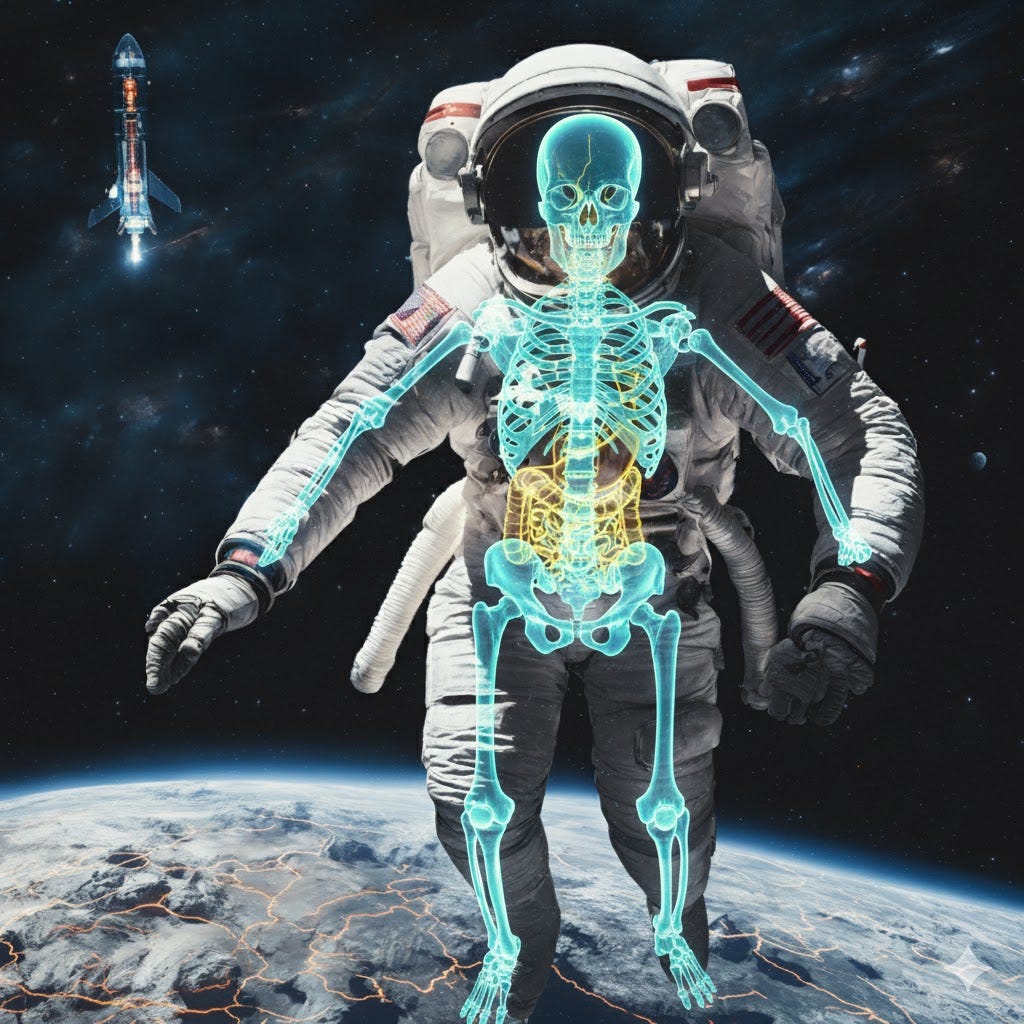
3. X-Ray Imaging for Space
There was nothing new about X-rays... until now. X-rays have been used for imaging in a variety of ways since their discovery—medicine, construction, security, etc. But the space industry is now seeing them used differently for Space Domain Awareness (SDA).
Why is this revolutionary?
Because it eliminates many of the aspects of mission planning that can go wrong for Space Object Identification (SOI), such as lighting, angles, and misinterpretation of mission data. Those worries go away.
Using X-ray imaging in space, warfighters are now able to capture high-fidelity images of space vehicle targets’ components, structure, and mechanisms. The applications are endless: on-orbit construction, counter-space activities, and maintenance.